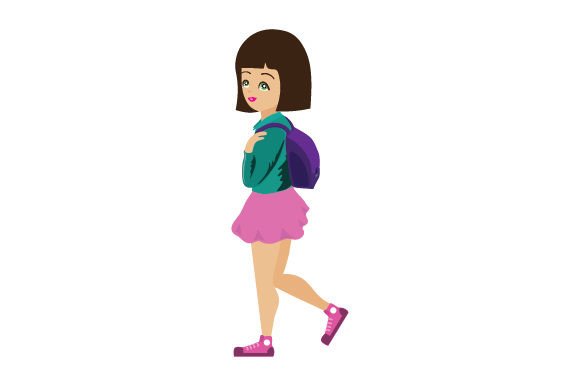
Back to School - Middle School Girl: Design Assets That Meet Real Creative Needs
When educators prep classroom bulletin boards, small businesses launch seasonal social campaigns, or freelance designers build back-to-school merch collections, one visual motif keeps reappearing—not as a cliché, but as a functional anchor: the Back to School - Middle School Girl design. It’s more than a nostalgic trope. It’s a versatile, audience-aligned visual shorthand that bridges developmental authenticity with contemporary design expectations.
What This Design Actually Represents—Beyond the Surface
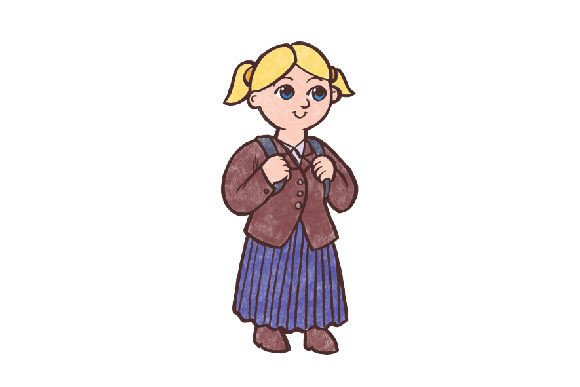
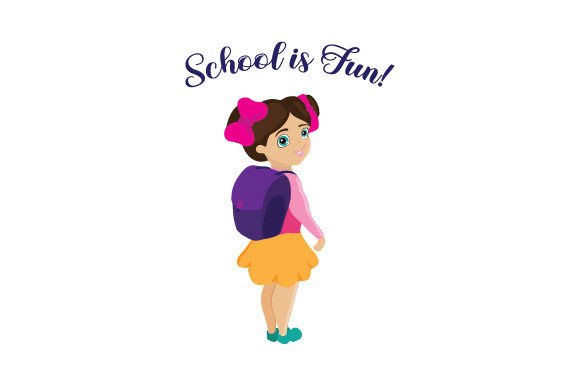
The Back to School - Middle School Girl illustration isn’t just about age or attire. It reflects a precise developmental and cultural inflection point: the shift from childhood dependence to emerging self-direction. Her posture, expression, and styling—whether she’s adjusting a backpack strap, holding a notebook with doodled margins, or glancing thoughtfully toward a hallway—communicate curiosity, mild uncertainty, and quiet agency. That nuance matters.
Unlike generic “schoolgirl” icons, this asset is calibrated for middle school—a stage where identity exploration accelerates, peer awareness deepens, and learning becomes more interdisciplinary. Designers who use it intentionally aren’t leaning on cuteness; they’re signaling emotional accuracy. A curriculum developer choosing this image for a student-facing digital module isn’t just adding decoration—they’re reinforcing psychological safety through relatable representation.
Why Format Flexibility Is Non-Negotiable Today
The fact that you’ll receive this design in SVG, transparent PNG, EPS, and DXF formats isn’t just technical detail—it’s strategic infrastructure. Each format serves distinct real-world workflows:
- SVG powers responsive web interfaces, LMS dashboards, and interactive e-learning tools—scaling cleanly across devices without loading delays or pixelation.
- Transparent PNG supports quick social media graphics, Canva templates, and email newsletter headers where background adaptability is essential.
- EPS remains indispensable for print-heavy users—school district branding kits, physical handouts, or local business flyers needing CMYK fidelity and vector scalability.
- DXF meets growing demand from educators and makers using laser cutters or CNC machines—think custom classroom signage, tactile learning aids, or STEM project components.
This multi-format availability responds directly to how creative work happens now: fluidly, across platforms, and often under tight deadlines. A marketing manager launching a back-to-school campaign doesn’t pause to convert files—they need plug-and-play assets that behave predictably in their existing stack.
Shifting Expectations Around Representation and Authenticity
Five years ago, many “back to school” illustrations leaned heavily on uniformed tropes or overly polished aesthetics. Today’s users—especially educators, curriculum designers, and inclusive brand teams—expect more. They notice when hair textures, body proportions, or accessory choices feel tokenized or outdated. The Back to School - Middle School Girl asset stands out because it avoids caricature: her clothing reads as lived-in (slightly rumpled sweater, mismatched socks), her expression avoids exaggerated cheer, and her pose suggests presence—not performance.
This aligns with broader shifts in educational visual standards. The National Association of Elementary School Principals now recommends reviewing all classroom imagery for developmental appropriateness and cultural resonance. Similarly, EdTech companies audit their UI illustrations against student empathy benchmarks—not just diversity checklists. When a teacher selects this design for a welcome slide, they’re not just picking an image; they’re making a subtle pedagogical choice about tone and belonging.
How Professionals Are Integrating It—Without Overuse
Smart integration avoids repetition fatigue. Consider these grounded examples:
- A freelance graphic designer uses the SVG version as a base layer in Figma, then swaps accessories (glasses, headphones, a sketchbook) across four variations—creating a mini visual system for a middle school wellness program’s digital toolkit.
- An independent curriculum writer embeds the transparent PNG into Google Slides templates, then adds editable text boxes and drag-and-drop activity icons—turning static slides into reusable teaching frameworks.
- A small-business owner selling personalized notebooks imports the EPS file into Adobe Illustrator, traces key outlines, and converts them into clean die-cut paths—enabling custom foil-stamped covers for local school fundraisers.
- An after-school coding instructor imports the DXF into LightBurn, adjusts scale for 3mm birch plywood, and cuts out puzzle-piece versions of the illustration—each piece labeled with computational thinking concepts (e.g., “Decompose,” “Pattern Recognition”).
Notice what’s consistent: the design isn’t the star. It’s scaffolding—supporting clarity, interaction, or customization. That’s where its practical value lives.
Not Just Seasonal—A Year-Round Asset With Evolving Utility
While “back to school” implies August/September timing, the Back to School - Middle School Girl design functions year-round in unexpected ways. Its emotional resonance extends beyond orientation week:
- Transition support: Counselors use simplified versions in printable coping strategy cards for students navigating academic pressure or social shifts.
- Professional development: Staff training modules on adolescent brain development feature annotated SVG layers highlighting eye contact cues, spatial awareness, and nonverbal stress signals.
- Community engagement: Library summer reading programs adapt the PNG into bilingual welcome banners—overlaying translated phrases like “¡Tu próxima aventura comienza aquí!” without altering the core visual trust anchor.
- Product iteration: An EdTech startup tests two onboarding flows—one with neutral icons, one with this illustration—and finds 22% higher completion among 11–13-year-old beta testers, citing “feels like it gets me.”
That last example underscores a quiet trend: visual familiarity reduces cognitive load for developing learners. It’s not about infantilizing—it’s about meeting neurodevelopmental needs with intentionality.
What to Watch For—Realistic Evolution Ahead
Look for subtle refinements rather than overhauls. Future iterations of assets like Back to School - Middle School Girl will likely emphasize:
- Contextual adaptability: Variants optimized for dark mode interfaces, high-contrast accessibility settings, or low-bandwidth environments (e.g., simplified SVGs under 5KB).
- Modular components: Separate, labeled layers for backpack, hairstyle, and footwear—enabling rapid customization without full redrawing.
- Behavioral nuance: Micro-animations (like subtle blinking or notebook-flipping) in SVG format for interactive learning apps—designed with motion sensitivity toggles built-in.
None of this requires abandoning the original. Instead, it builds on its foundation—keeping the core recognition intact while expanding utility. That balance is why professionals return to this asset cycle after cycle.
Final Thought: Utility Over Aesthetics Alone
The staying power of Back to School - Middle School Girl lies in its functional honesty. It doesn’t try to be everything to everyone. It serves a specific developmental moment, a set of technical requirements, and a growing expectation for respectful, adaptable visual communication. Whether you’re building a district-wide literacy initiative, prototyping a student feedback tool, or designing merch for a PTA fundraiser, its value isn’t in how it looks—but in how reliably it works across your actual workflow. And in today’s fragmented, fast-moving creative landscape, that kind of dependable utility is increasingly rare—and increasingly essential.