Hand Holding a Pencil Embroidery Design
There’s something quietly powerful about the image of a hand holding a pencil — not as a symbol of childhood homework, but as a quiet declaration of intention. It’s a gesture that says: I’m making something. I’m thinking. I’m here, creating. That’s why the Hand Holding a Pencil embroidery design resonates so deeply with artists, educators, makers, and anyone who values thoughtful creation. It’s not just decorative — it’s meaningful, adaptable, and grounded in real creative practice.
A Design That Serves Purpose and Personality
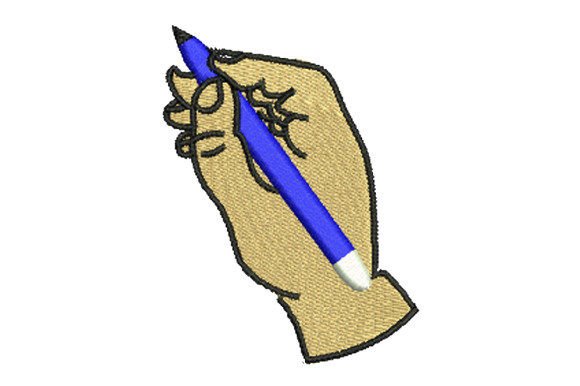
This machine embroidery design features clean, confident linework — a realistic yet stylized hand cradling a pencil at a natural angle. The embroidery captures subtle details: the curve of the thumb, the slight tension in the index finger, the gentle taper of the pencil lead. It’s digitized for clarity across fabric types and stitch counts, ensuring crisp results whether stitched on cotton twill, linen, or lightweight denim.
What makes it especially useful is its versatility in format and function. The design comes in multiple file types — PES, DST, JEF, EXP, VP3, HUS, and SVG — so it works seamlessly with Brother, Janome, Bernina, Husqvarna Viking, and other major embroidery machines. No conversion headaches. No lost detail. Just reliable, ready-to-stitch precision.
Creative Applications Beyond the Hoop
Think beyond the standard tote bag or framed hoop. This design thrives where creativity meets utility:
- Studio branding: Stitch it onto aprons, notebook covers, or tool rolls for illustrators, lettering artists, or art teachers — a subtle, professional signature that communicates craft without shouting.
- Back-to-school essentials: Add it to backpacks, pencil cases, or teacher gift sets. Pair it with monogrammed initials or a student’s name in a clean sans-serif font for personalization that feels warm, not generic.
- Educational tools: Use it on classroom banners, reading corner pillows, or visual schedules for elementary art rooms. Its simplicity supports literacy around process — “draw first,” “think before you write,” “your hand guides your ideas.”
- Small business packaging: Embroider it on kraft paper gift tags, fabric pouches for handmade supplies, or reusable sketchbook sleeves sold by independent stationery brands.
It also adapts beautifully to mixed-media projects. Try stitching the hand in neutral thread (ecru, charcoal, slate), then hand-embroidering the pencil lead in metallic silver or graphite-gray silk floss. Or use it as a focal point in a larger quilt block — surrounded by tiny stitched brushes, palettes, or open books.
For Different Creators, Different Uses
Freelance designers and illustrators can integrate this motif into client-facing assets: embroidered portfolio sleeves, custom presentation folders, or even as part of a cohesive brand kit — paired with a simple logotype and consistent color palette. It signals authenticity and hands-on skill without leaning on overused tropes like lightbulbs or paint splatters.
Educators and curriculum developers find value in its neutrality and accessibility. Unlike cartoonish or overly literal imagery, this hand feels inclusive — ageless, gender-neutral, and culturally unmarked. It works equally well in Montessori classrooms, high school AP Art studios, or adult continuing education workshops. You can scale it down for flashcards (“What tool do we use to sketch?”) or enlarge it for wall-mounted visual anchors during drawing units.
Small business owners — especially those selling handmade journals, art supplies, or craft kits — use it to reinforce quality and intentionality. When customers see this design stitched cleanly on a linen journal cover, it subtly communicates care in construction and respect for the creative act itself. It’s not flashy — it’s trustworthy.
Styling With Intention, Not Just Aesthetics
How you style Hand Holding a Pencil matters as much as where you place it. Here are practical recommendations:
- Choose thread wisely: Matte cotton threads (like Isacord or Glide) give a refined, tactile finish — ideal for professional gifts or studio gear. Avoid high-sheen polyester unless you’re aiming for contrast against dark, textured fabric.
- Anchor it with space: Don’t crowd the design. Leave generous margin — especially above the pencil tip — to preserve its sense of motion and openness. A tight crop undermines its quiet confidence.
- Pair thoughtfully: Combine with minimalist typography (“Make Space,” “Start Here,” or simply a date), not busy patterns. Let the hand carry the weight of meaning.
- Test on your fabric: Run a sample on the exact material and stabilizer you’ll use. Linen may need cutaway + tear-away combo; lightweight cotton poplin often performs best with medium-weight tear-away only.
Consistency doesn’t mean repetition — it means honoring the design’s core idea across applications. Whether it’s stitched on a child’s lunchbox or an architect’s field notebook, the gesture remains the same: deliberate, human, grounded.
Why It Endures — And Why It Fits Your Work
In a world saturated with digital interfaces and automated outputs, Hand Holding a Pencil offers something rare: a visual pause. It doesn’t promise productivity hacks or viral growth. Instead, it affirms the value of slow attention, physical engagement, and iterative learning — principles that matter whether you’re sketching a logo, grading student drawings, prototyping a product, or guiding a workshop on visual storytelling.
That’s why it fits so naturally into diverse contexts — not because it’s vague, but because it’s precise in its humanity. It doesn’t represent perfection. It represents presence. And presence is what makes creative work resonate, whether you’re sharing it online, teaching it in person, or building a business around it.
If you’re choosing embroidery designs not just for visual appeal but for lasting relevance, this one earns its place. It’s not a trend. It’s a touchstone — for your studio, your students, your clients, and your own daily return to the work that matters.