Ginger Honey
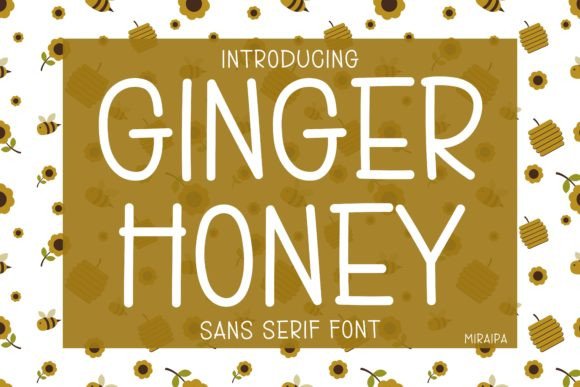
There’s something quietly magical about a font that feels like a warm hug—soft-edged, sincere, and full of personality. Ginger Honey is exactly that: a hand-drawn, friendly sans serif typeface with gentle curves, subtle irregularities, and a cheerful rhythm that invites connection. It doesn’t shout—it smiles. And in a digital world saturated with sharp corners and sterile precision, that warmth makes all the difference.
What Makes Ginger Honey Feel So… Human?
Unlike many script or display fonts that lean heavily into flourish or formality, Ginger Honey balances approachability with legibility. Its letters are carefully crafted to mimic natural handwriting—slight variations in stroke weight, relaxed spacing, and soft terminals—but without sacrificing clarity at small sizes or on screen. You’ll notice how the lowercase a and g have open, airy shapes; how the y curls just enough to feel playful but not distracting; and how every capital letter carries a quiet confidence, never stiff or overdesigned.
This isn’t just “cute for cute’s sake.” The charm of Ginger Honey comes from intention—not gimmick. Each glyph was drawn by hand, then refined digitally to preserve its organic soul while ensuring consistency across weights and characters. That balance is why it works equally well on a child’s birthday banner and a minimalist wedding invitation.
Where Ginger Honey Shines (and Where It Might Pause)
Ginger Honey thrives in contexts where tone matters as much as text. It’s ideal when you want your message to feel personal, thoughtful, or gently joyful—never corporate, cold, or overly serious. But like any expressive font, it has natural boundaries.
- Perfect for: Greeting cards, handmade planners, social media quote graphics, classroom posters, baby shower decorations, cozy blog headers, DIY gift tags, and seasonal crafts (think pumpkin spice latte labels for fall or cinnamon-roll-themed Christmas cards).
- Thoughtful for: Short headlines, pull quotes, product packaging for artisanal goods, and apparel designs where friendliness enhances brand voice (e.g., a small-batch honey company or a children’s book illustrator).
- Less suited for: Long-form body text (like novels or legal documents), data-heavy dashboards, or ultra-minimalist branding that prioritizes stark neutrality over warmth.
That last point isn’t a flaw—it’s clarity. Ginger Honey wasn’t built to disappear into the background. It’s meant to be noticed, felt, and remembered.
Real-Life Moments Where Ginger Honey Adds Meaning
Imagine a teacher printing out weekly “You’re Doing Great!” notes for her third-grade class. With Ginger Honey, those words land differently—not just read, but received. The font echoes the care behind the message, reinforcing emotional safety in learning spaces.
Or picture a small business owner launching a new line of herbal teas. Instead of defaulting to sleek modern fonts that say “premium,” they choose Ginger Honey for their label copy—and suddenly the brand feels like a neighbor sharing a recipe, not a corporation pushing a product.
At weddings, Ginger Honey softens formal language beautifully. A seating chart written in this font doesn’t feel like bureaucracy—it feels like hospitality. Same goes for Halloween party invites: instead of spooky clichés, you get whimsy with heart. A “Trick-or-Treat Trail Map” in Ginger Honey feels like it was drawn by a kind ghost who loves doodles.
Who Benefits Most From Ginger Honey?
The answer is broader than you might expect:
- Creative educators who design classroom resources that reflect empathy and joy.
- Small-business owners building authentic, values-driven brands—especially in wellness, food, parenting, or handmade markets.
- DIY enthusiasts making personalized gifts, scrapbooks, or seasonal décor without needing advanced design skills.
- Content creators curating Instagram carousels, Pinterest pins, or blog headers that stand out through sincerity—not saturation.
- Parents and caregivers crafting growth charts, chore boards, or milestone trackers that celebrate progress with tenderness.
Even professional designers reach for Ginger Honey when they need to humanize a project without compromising polish. It’s become a go-to “emotional translator”—turning functional text into something that resonates.
Practical Tips for Using Ginger Honey Well
Getting the most from Ginger Honey isn’t about rules—it’s about rhythm and respect.
- Pair it wisely: Let it breathe beside clean, neutral sans serifs (like Inter, Lato, or Montserrat) for contrast. Avoid competing decorative fonts—Ginger Honey prefers to lead, not share the spotlight.
- Size matters: It performs best at 16px and up for web, and 14pt+ for print. At tiny sizes, its subtleties fade—so save it for moments meant to be seen and savored.
- Color gently: Soft pastels, warm neutrals, or deep earth tones enhance its natural vibe. High-contrast black-on-white works, but try charcoal on cream or terracotta on oat for extra warmth.
- Don’t overdo it: One headline in Ginger Honey can elevate an entire layout. Using it for every heading, button, and caption dilutes its impact—and risks visual fatigue.
Think of it like a favorite spice: essential in the right measure, overwhelming in excess.
Why “Friendly” Isn’t Just a Style Choice—It’s a Strategy
In today’s attention economy, people don’t just consume content—they assess intent. A font like Ginger Honey signals something before a single word is read: You’re welcome here. This was made with care.
That impression builds trust faster than any tagline. For online users scrolling quickly, it creates micro-moments of calm. For children learning to read, its open shapes support early recognition. For elders receiving handwritten-style cards, it evokes familiarity and comfort.
And yes—it’s practical. It includes standard Latin characters, basic punctuation, numerals, and supports common Western European languages. No missing accents or awkward substitutions mid-sentence. It’s ready when you are.
Bringing Ginger Honey Into Your World
You don’t need a design degree—or even Photoshop—to use Ginger Honey. It works in Canva, Google Docs (via add-ons), Adobe Creative Cloud, Cricut Design Space, Silhouette Studio, and most modern design tools. Many platforms offer free trials or one-time purchase options, so you can test it on a real project before committing.
Before downloading, ask yourself: Where do I want to soften the edges? Where does my audience need reassurance, delight, or simplicity? If your answer involves diaries, planners, invitations, school projects, seasonal crafts, or heartfelt messages—that’s Ginger Honey’s sweet spot.
It won’t solve every design challenge. But for the right moment—the one where warmth matters more than wow—it might be exactly what you’ve been looking for.